

Most property owners fixate on rental income and occupancy rates. Those numbers are easy to measure and track month to month. What often gets far less attention is the physical condition of the asset itself.
Be honest: Have you ever delayed a repair just because it didn’t feel urgent?
Deferred upkeep in rental properties means pushing off routine care to save a few dollars today. Many investors do this to manage immediate cash flow or stay within a strict quarterly budget.
Those small delays build up.
Minor issues turn into costly repairs. Costly emergencies become more likely. The maintenance impact on rental ROI shows up through rising operating costs, lower resident satisfaction, higher vacancy risk, and declining property value.
This article explains what deferred maintenance looks like, where the real cost shows up, why many homeowners delay repairs, and how professional property management helps prevent the cycle.
What Deferred Maintenance Looks Like in Rental Properties
Deferred maintenance shows up in everyday property operations. It builds through small delays in handling basic property maintenance.
In rental properties, this happens faster because tenants use the home daily. Systems wear down quicker, and maintenance needs increase. Without regular maintenance, small problems escalate into serious maintenance issues and property damage. Common examples include:
- Skipping routine maintenance like gutter cleaning
- Ignoring minor issues such as small leaks
- Delaying service for HVAC systems
- Postponing exterior or safety-related repairs
- Missing early warning signs that lead to electrical repairs
Deferred Maintenance Is Usually a Pattern, Not a One-Time Choice
Most property owners don’t plan to delay property maintenance. It happens gradually, one decision at a time.
“I’ll take care of that next month.” That’s how it starts.
A non-urgent repair gets pushed back to manage maintenance costs or stay within a maintenance budget. Then another maintenance task gets delayed. These small decisions create a pattern that’s easy to overlook.
This pattern increases deferred maintenance costs and leads to more complex repair bills. Routine maintenance tasks can turn into expensive repairs or even major ones. Operating expenses become less predictable, and property operations become harder to manage.
Many homeowners see these actions as short-term savings. In reality, it leads to higher long-term costs and reduced operational efficiency.
Why Rental Properties Are Especially Vulnerable
Rental properties go through more wear and tear than owner-occupied homes. Tenants come and go, systems run constantly, and small problems build quickly without regular maintenance.
You also rely on tenants to report maintenance issues. Not every problem gets reported early. Some only come to light when visible signs appear, and repair costs are already higher. Here’s where deferred maintenance in rental properties becomes a real challenge:
- Minor issues go unaddressed until they require costly repairs
- Early mold growth or water damage spreads before action is taken
- HVAC systems fail due to delayed preventive maintenance
- Small faults lead to electrical repairs and safety concerns
- Lack of routine inspections allows property damage to worsen
These patterns increase deferred maintenance expenses and create hidden costs that affect your bottom line.
The Maintenance Impact on Rental ROI Shows Up Long Before a Major Breakdown
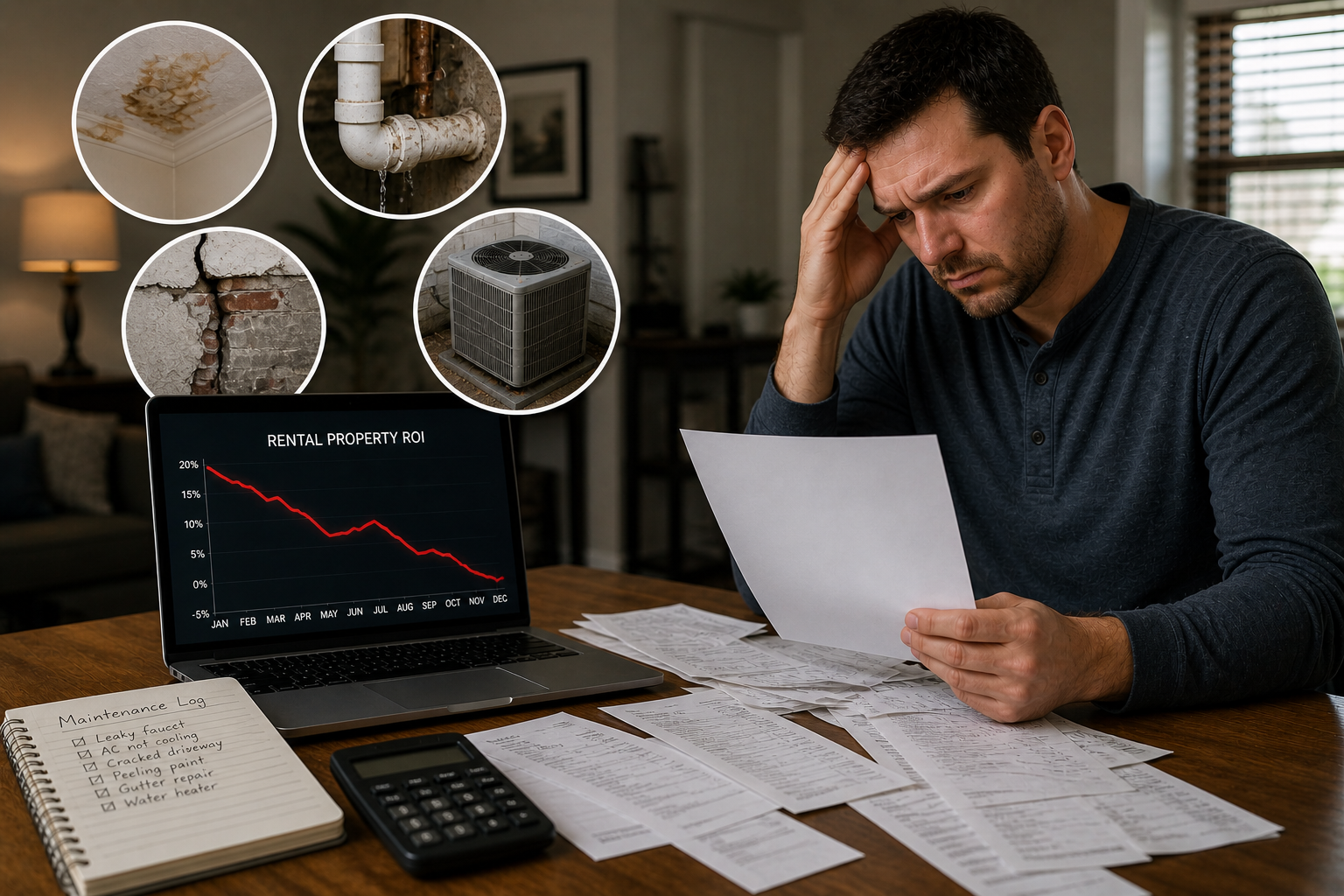
Maintenance decisions directly affect your bottom line. It’s easy to assume ROI only takes a hit during major repairs like a roof replacement or system failure.
The maintenance impact on rental ROI builds gradually. Poor property maintenance increases operating costs, reduces operational efficiency, and weakens cash flow. These shifts happen through inconsistent repair bills, growing maintenance issues, and rising maintenance costs.
Small Repairs Turn Into Expensive Repairs
Small problems rarely stay small.
A minor leak can lead to water damage and mold growth. Delayed service on HVAC systems can result in full system failure. Cracked exterior materials can develop into structural issues. This creates a compounding effect:
- Minor issues grow into major repairs
- Preventable problems lead to higher repair costs
- Property damage spreads and becomes harder to manage
Reactive Maintenance Creates Premium Pricing
Delaying maintenance often forces a reactive approach. Reactive maintenance means handling repairs only after something breaks instead of addressing issues early. Repairs happen under pressure instead of being planned. This leads to:
- Higher costs for urgent or after-hours work
- Limited vendor availability
- Faster decisions with less flexibility
- Inconsistent vendor performance
Cash Flow Suffers Even When Rent Stays the Same
Steady rental income can make a property look like it’s “performing well.” The numbers may seem stable on the surface. Rising maintenance costs tell a different story. When maintenance issues increase:
- Operating costs go up
- Repair costs become unpredictable
- Profit margins shrink
Many homeowners focus on income while overlooking the true cost of ownership. Strong property management and a proactive approach help stabilize expenses and support long-term performance.
The Long-Term Cost of Poor Property Maintenance Goes Beyond Repairs
Repair bills tell part of the story. The real cost shows up in how your property performs over time.
Poor property maintenance affects several areas at once. It impacts tenant experience, leasing speed, and even your ability to plan with a specific budget. These “hidden costs” often go unnoticed until performance starts to decline.
Tenant Retention Gets Harder
Tenants pay attention to how a property is maintained. Quick fixes and consistent follow-through build trust. Unresolved maintenance issues create frustration. When problems repeat or take too long to fix, tenants start looking elsewhere. This directly affects resident satisfaction and renewal rates. You may notice:
- More tenants choosing to move at the end of a lease
- Shorter tenancy periods
- Less confidence in your property care
Reliable maintenance teams and strong property management help ensure compliance withtenant expectations. When maintenance is handled well, tenants are more likely to stay.
Vacancy Costs Rise When the Property Shows Neglect
A vacant unit puts your property under a different kind of pressure. Every day without a tenant affects your rental income. Potential tenants notice the condition right away. Visible signs like worn finishes or unresolved maintenance issues reduce appeal. First impressions matter during showings. This often leads to:
- Longer vacancy periods
- Increased marketing or concession costs
- Difficulty attracting qualified applicants
Without regular maintenance and routine inspections, these issues become harder to control. A well-maintained home stands out and helps reduce downtime between tenants.
Deferred Maintenance Lowers Exit Value
When it’s time to sell, buyers look closely at property condition and maintenance history.
Deferred maintenance raises concerns about hidden costs and future maintenance needs. Buyers often review available historical data to understand how well the property has been managed. These concerns directly shape how they approach the deal. You’ll often see:
- Lower purchase offers
- Requests for credits or repairs
- Hesitation due to perceived risk
The true cost becomes clear at sale. Many homeowners accept less while still dealing with unresolved maintenance needs. A proactive maintenance strategy supports long-term value, improves buyer confidence, and positions your property as a stronger investment.
Why Landlords Defer Maintenance Even When They Know Better
Most property owners understand the importance of property maintenance. You know regular maintenance protects property value and keeps operations running smoothly.
So, why does maintenance still get delayed?
In many cases, it comes down to day-to-day pressure. Managing rental properties involves constant decisions. Maintenance tasks compete with leasing, tenant communication, and financial priorities. Without a clear system or proactive maintenance strategy, delays start to build.
Limited reserves make it even harder to handle routine maintenance expenses. Vendor coordination also takes time, especially without reliable maintenance teams in place. These challenges affect operational efficiency and make it easier to postpone non-urgent work. These decisions often seem practical at the time. The long-term costs show up later through rising deferred maintenance costs, higher repair bills, and growing maintenance issues.
Short-Term Savings
It’s common to push a repair to a later date. You might plan to handle it at turnover, next quarter, or when there’s more room in your maintenance budget.
This approach helps manage immediate maintenance costs and stay within a specific budget. It feels practical in the moment. The challenge shows up later.
Delays increase deferred maintenance costs and lead to higher repair costs. What could have been handled as part of routine maintenance often turns into expensive repairs or even costly emergencies. The short-term savings create higher long-term costs and make it harder to plan future expenses.
They Are Self-Managing
Many homeowners manage their own rental properties. That means handling everything from tenant concerns to scheduling repairs. Daily responsibilities include:
- Responding to tenants
- Coordinating vendors
- Managing rent collection
- Ensuring compliance with local requirements
Maintenance often gets pushed aside when schedules get busy. Without dedicated maintenance teams or strong local contractor relationships, it becomes harder to track maintenance needs and follow through on time. This affects vendor performance, delays important maintenance tasks, and increases operating costs. Property operations become reactive instead of planned.
Working with experienced property managers brings structure to the process. With better systems, consistent follow-up, and a proactive approach, you can stay ahead of maintenance and make more informed decisions that protect your investment.
What Proactive Maintenance Looks Like Instead
The solution to deferred maintenance comes from managing property maintenance with a clear system, not “spending more or recklessly.”
A proactive approach focuses on consistency. It uses routine inspections, preventive maintenance, and scheduled maintenance tasks to handle issues early. This keeps maintenance needs predictable, supports operational efficiency, and helps you stay within a specific budget.
Routine Inspections Create Visibility
You can’t manage what you don’t regularly inspect.
Routine inspections help you stay ahead of maintenance issues before they grow. They give you a clear view of property condition and help prioritize maintenance tasks. With consistent inspections, you can:
- Identify early signs of wear
- Catch minor issues before they turn into bigger problems
- Build a more accurate maintenance budget
Seasonal Maintenance Protects High-Cost Systems
Seasonal inspections play a key role in protecting major systems. Planned service keeps HVAC systems, roofing, and drainage working efficiently. It also reduces the risk of sudden breakdowns. Common seasonal maintenance tasks include:
- HVAC servicing before peak seasons
- Gutter cleaning to prevent water buildup
- Roof checks after severe weather
- Drainage and exterior inspections
Documentation Turns Maintenance Into an ROI Strategy
Tracking maintenance activities creates long-term value. Detailed records help you understand patterns, track maintenance costs, and plan ahead. Historical data provides insight into recurring maintenance issues and future repair needs. When maintenance is documented and tracked, it becomes part of your investment strategy. This allows you to:
- Justify maintenance spending
- Plan for long-term costs
- Improve overall property operations
How Professional Property Management Protects Long-Term ROI
Deferred maintenance becomes harder to control as your portfolio grows. Keeping up with inspections, maintenance tasks, and vendor coordination takes time and structure.
This is where working with a professional team like Oz Realty comes in.
Oz Realty provides property management services built around consistency, speed, and cost control. You get clear visibility into maintenance, speed up informed decisions, and protect long-term property value. With structured workflows, routine inspections, and coordinated maintenance teams, property managers reduce the maintenance impact on rental ROI. Every request gets tracked, every repair gets followed through, and every decision aligns with your maintenance budget and long-term goals. This tech-enabled approach supports tenant retention, reduces vacancy time, and keeps cash flow more predictable.
Better Systems Mean Fewer Costly Delays
Strong systems keep maintenance organized and on schedule. Centralized workflows ensure maintenance tasks are recorded, assigned, and completed without missed follow-ups. This reduces delays that often lead to costly emergencies. You get:
- Faster response to maintenance issues
- Consistent follow-through on repairs
- More stable operating costs
Vendor Relationships Improve Both Cost and Speed
Reliable vendor relationships make a big difference in property maintenance. Property managers work with trusted maintenance teams and established vendors. Since they handle multiple properties, they can secure faster scheduling and more consistent vendor performance. This leads to:
- Quicker turnaround on repairs
- More predictable repair costs
- Better quality work across maintenance tasks
For many landlords, this approach removes the stress of coordinating vendors and chasing updates.
Protect Your ROI with a Proactive Maintenance Strategy
Small maintenance decisions shape the long-term performance of your rental property.
Delays may seem manageable at first. The impact builds through rising repair costs, unstable cash flow, and growing maintenance issues. Many property owners only recognize the true cost once operating costs increase and performance starts to decline.
Poor property maintenance affects every part of your investment. It reduces rental income consistency, lowers resident satisfaction, increases vacancy risk, and weakens property value. These outcomes directly affect your returns and long-term growth. A proactive maintenance strategy puts you back in control. It keeps maintenance costs predictable, improves operational efficiency, and protects your asset through consistent property care.
Working with Oz Realty gives you access to a tech-enabled property management system built for consistency and speed. You gain clear visibility into maintenance needs, better cost control, and fewer costly delays.
If you want steady rental income, stronger tenant retention, and a well-maintained home that holds its value, structured maintenance systems make the difference. Oz Realty helps you move from reactive repairs to a proactive approach that protects your investment for the long term.


