
Few moments in a lease create more friction than the security deposit refund, because the landlord sees money needed for repairs while the tenant sees money they’re owed. Toledo landlord deposit rules and the security deposit deductions Ohio courts accept are narrower than many owners assume, and a landlord who follows them protects both the property and themselves from penalties.
Those rules come from state law. Ohio Revised Code 5321.16 lets a landlord apply a security deposit only to cover past due rent and damages caused by the tenant’s failure to follow the lease or the tenant duties in ORC 5321.05, and every charge must be itemized in writing. When a court finds a charge doesn’t fit those categories, the landlord can be ordered to pay the tenant double the amount withheld plus attorney fees.
This article covers what a Toledo landlord can and cannot deduct, how to document each charge, and what it costs to get it wrong. It’s general information about Ohio security deposit laws, not legal advice, so talk with an attorney about your specific rental property.

Ohio Security Deposit Law: What the Statute Requires
Ohio security deposit law is short, but every line of it matters once a tenant disputes a charge. Before any landlord decides what to deduct, the process should be anchored in the statute’s timing, paperwork, and interest rules.
The 30-Day Return Rule and Itemized List
Under ORC 5321.16(B), the landlord must deliver the refund and a written notice itemizing any deductions within 30 days after the rental agreement ends and the tenant delivers possession of the rental unit. The tenant has a duty as well: providing a forwarding address or new address in writing. When a tenant gives proper notice to vacate, ask for that new address in writing right away. If the tenant fails to give the landlord a new address, they lose the right to double damages and attorney fees, though the security deposit itself is still owed. Our guide on how to return a security deposit in Ohio walks through the full timeline and the paperwork that goes with it.
Deposit Amounts and Interest
Ohio doesn’t cap how much a landlord can collect, but larger deposits come with an interest duty. Under ORC 5321.16(A), the portion of a security deposit above $50 or one month’s rent, whichever is greater, earns 5% per year if the tenant remains in possession for six months or more, and the landlord must pay it annually. For example, a tenant paying $900 a month with a $1,400 security deposit is owed 5% on the $500 above one month’s rent, or $25 a year.
What Landlords Can Deduct From a Deposit
The security deposit deductions Ohio allows fall into a short list, and each charge has to trace back to the lease or to the tenant’s statutory duties. These are the charges a landlord can support when a tenant pushes back.
Past-Due Rent and Unpaid Charges
Unpaid rent is the clearest charge because the statute names it directly. Once the tenancy ends, a landlord can apply the tenant’s security deposit to cover unpaid rent and other charges the lease agreement assigns to the tenant, such as late fees. The security deposit isn’t a substitute for the tenant’s obligation to pay rent during the lease, so keep a clean ledger showing each month’s charges and payments.
Toledo adds a local limit on one of those charges: under Toledo Municipal Code 1770.06, a late fee for any month can’t exceed the greater of $25 or 5% of the monthly contract rent, so any late fee a landlord withholds should match both the lease agreement and that cap.
Rental Damage Deductions Beyond Normal Wear
Damage is harm beyond ordinary use caused by the tenant, their household, or their guests, including failing to operate plumbing fixtures properly or negligently damaging the premises, both of which ORC 5321.05 prohibits. Rental damage deductions Toledo landlords can support include large holes in walls, broken windows, pet urine stains in carpet, and burns or gouges in flooring.
The charge has to reflect reasonable repairs to the property, not upgrades. The Akron Municipal Court explains that damage awards for items like carpet reflect depreciated value rather than the price of new, so a tenant who ruins five-year-old carpet with a 10-year life owes about half its replacement cost, not the full amount. A landlord who swaps builder-grade carpet for luxury vinyl is making an improvement, and that difference is the landlord’s to pay.
Cleaning and Unpaid Utilities
Cleaning is chargeable only when the tenant leaves the rental unit dirtier than it was at move-in, beyond what ordinary use would explain. In Kelley v. Johnston, an Ohio appeals court held that the landlord bears the burden of linking damage to the tenant and rejected a carpet cleaning charge supported only by an invoice. Describe what was cleaned, where, and why, and tie each line to move-in and move-out photos so a court can determine whether the work went beyond routine turnover.
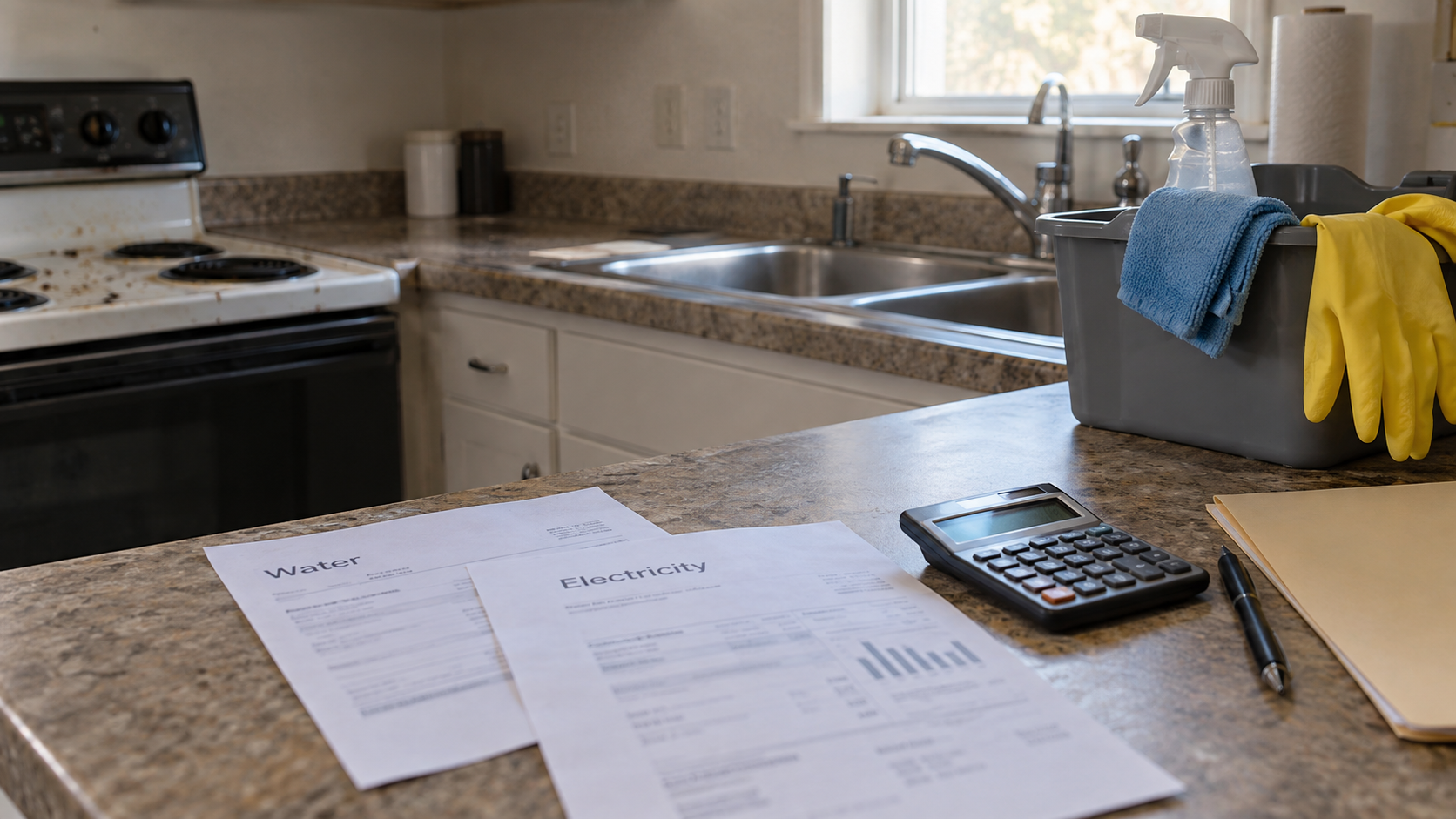
Unpaid utilities work the same way when the lease makes the tenant responsible for them, and a landlord can apply the deposit to cover that balance. Toledo landlords have extra reason to track this, since the City of Toledo notes that delinquent water, sewer, storm water, and refuse charges may become a lien on the property. Pull a final bill at move-out and itemize any balance the tenant left behind.
What Landlords Cannot Deduct: Normal Wear and Tear
Normal wear and tear is the gradual decline that happens when a home is used as intended, and it’s a cost the landlord absorbs. Ohio Legal Help lists faded paint, small nail holes, light carpet dirt, and worn carpet as examples of wear tenants shouldn’t pay for. This is the most disputed line in any security deposit refund, so every charge should pass one test: would this condition exist if a careful tenant had lived in the rental for the same period?
Normal Wear and Tear Versus Tenant Damage
| Normal Wear and Tear (Landlord Absorbs) | Chargeable Tenant Damage |
|---|---|
| Faded paint and light scuffs on walls | Large gouges, crayon, or unapproved paint colors on walls |
| Small nail holes from hanging pictures | Anchors pulled out of walls or TV mounts installed without permission |
| Carpet worn along walkways | Burns, tears, or pet stains in carpet |
| Sun-faded blinds on windows | Broken windows or ripped blinds |
| Door hardware loosened by age | Doors broken by force or misuse |
| Minor grout wear in a bathroom | Mold from unreported leaks or tenant neglect |
For a room-by-room breakdown with useful-life benchmarks, see our guide to normal wear and tear vs. damage.
Documenting Move-In and Move-Out
Documentation is what turns a judgment call into a defensible charge. Ohio courts place the burden on the landlord to prove damage, so the records need to speak for themselves if a tenant decides to sue.
Move-In and Move-Out Inspections
Complete a signed move-in checklist and take dated photos and videos showing every room of the apartment or house, including walls, carpet, windows, and appliances. At move-out, repeat the same inspection in the same order so the property’s condition before and after is obvious. That matched set allows a court to determine whether a condition is new, and it protects the landlord when a tenant believes a charge was unfair.
Writing a Compliant Itemized Statement
The itemized list should identify each charge, where it is in the apartment or home, why it goes beyond normal wear, the repair amount with depreciation applied, and the remaining balance returned. Attach invoices or estimates, apply any unpaid rent by month, and send everything as a written notice to the tenant’s forwarding address within 30 days. A generic line such as “cleaning” or “repairs” invites a dispute, while a specific line tied to photos gives a landlord something a small claims court can verify.
Pet Deposits, Improper Deductions, and Disputes
Pet charges and disputed withholdings are where many landlord-tenant deposit cases end up. A landlord who handles both with the same discipline keeps the exposure low.
Pet Deposits and Additional Deposits
Under ORC 5321.01, a security deposit is any deposit of money or property that secures the tenant’s performance under the lease, so refundable pet deposits and any additional security deposit generally follow the same return and itemization rules. Include them when calculating interest, and label any non-refundable pet fee clearly, since a fee that’s really held against damage may be treated as a security deposit. Assistance animals fall under federal fair housing law rather than a pet policy, and HUD withdrew its prior assistance animal guidance in September 2025, so a landlord should check with counsel before charging a pet deposit for one.
The Cost of Improper Deductions
Under ORC 5321.16(C), if the landlord fails to comply, the tenant can recover the money wrongfully withheld plus an equal amount in damages and reasonable attorney fees. In Smith v. Padgett, the Ohio Supreme Court held that this liability is mandatory when a court finds the landlord wrongfully withheld any portion of a tenant’s security deposit, even if an itemized list was sent. In Bennett v. Esmond, a 2025 Toledo case, the landlord offered no evidence of damage, and the appeals court ordered $1,150 on a $575 security deposit plus attorney fees.
If a tenant believes a charge is improper, the usual next steps are a written demand letter, a call to legal aid or the renter resources at Ohio Legal Help, and then legal action in small claims court, which hears money claims up to $6,000 under ORC 1925.02. Because a tenant can sue to recover double the amount wrongfully withheld, a landlord who can’t document a charge should refund that portion early rather than risk court costs and fees on top of the original security deposit.
Deduct With Confidence and Stay Compliant
Following Ohio security deposit laws protects the landlord as much as the tenant, because clear documentation is what makes a legitimate charge stick and keeps a disputed one from becoming a reason to sue. Charge for unpaid rent, real damage, excess cleaning, and unpaid utilities, prorate repairs for age, and leave normal wear and tear on your side of the ledger.
Oz Realty handles this process for every property we manage in Toledo. We complete documented move-in and move-out inspections, prepare itemized charges backed by photos and invoices, track deadlines and interest in AppFolio, and return every full security deposit or remaining balance on time under Ohio law.
Have a deposit question or a move-out coming up? Schedule a call with Oz Realty and let our team handle inspections, itemization, and returns in full compliance with Ohio law.
Disclaimer: This article is provided for general informational purposes only and does not constitute legal advice. Laws and local ordinances change over time, and how they apply depends on the specific facts of each situation. Oz Realty is a property management company, not a law firm, and reading this article does not create an attorney-client relationship. Consult a licensed Ohio attorney before making decisions about a specific security deposit, lease, or dispute.


