
Knowing how to return a security deposit correctly is where Ohio landlords win or lose on compliance, because move-out is the point in a lease where the law attaches automatic penalties to your paperwork. Ohio security deposit laws give you 30 days to act, require a written itemized statement for every deduction, and double the bill when a court finds any part of the deposit was wrongfully withheld.
A Toledo landlord learned how strict those rules are in November 2025. In Bennett v. Esmond, the landlord sent the tenants an itemized list of damages but offered no evidence at trial to support the charges. Toledo Municipal Court ordered the $575 security deposit returned but declined to award more because the list had been sent. The Sixth District Court of Appeals reversed, ordering $1,150 plus reasonable attorney’s fees and holding that the penalty applies whether or not the landlord itemized or acted in bad faith.
Ohio security deposit laws come from state law, specifically Ohio Revised Code 5321.16, and deposit disputes in Toledo are heard in Toledo Municipal Court, the same court where the Bennett case began. This guide covers the Ohio security deposit return deadline, a step-by-step return process, what the itemized statement must include, the refund rules for interest and joint tenants, and the penalties for mistakes. It’s general information and doesn’t constitute legal advice, so consult legal counsel about your specific situation.
Key Takeaways
- You have 30 days after the rental agreement terminates and the tenant returns possession to deliver the refund and any itemized deductions together.
- Deductions are limited to past due rent and damages caused by the tenant’s noncompliance with the lease or Ohio law, never normal wear and tear.
- A tenant who doesn’t provide a forwarding address in writing loses the right to double damages and attorney fees, but not the security deposit itself.
- Pet deposits generally follow the same return rules as any other security deposit.
- If a court finds any amount was wrongfully withheld, double damages and reasonable attorney fees are mandatory.
The Ohio Security Deposit Return Deadline
Every step of returning security deposits is paced by a single date, so the Ohio security deposit return deadline is the first thing to get right. Once you know exactly what starts the clock, the rest of the process becomes a matter of working backward from day 30.

When the 30-Day Clock Starts
Under ORC 5321.16(B), you must deliver a written notice itemizing any deductions, together with the amount due, within 30 days after termination of the rental agreement and delivery of possession. Both events matter: the lease has to be over, and the tenant has to have moved out and returned control of the rental unit, usually by turning in the keys. The deadline runs from whichever of those two events happens last.
The refund and the itemized statement travel together, so a partial check sent now with an explanation promised later doesn’t satisfy the statute, and neither does a full refund mailed on day 31. When a tenant moves out before the lease is up, many landlords inspect immediately while the evidence is fresh, then finalize the return once the rental agreement ends and any remaining rent obligation is known.
The Tenant’s Forwarding Address Requirement
Ohio law places one obligation on the tenant: providing a forwarding address or new address in writing. If the tenant fails to do so, they lose the right to double damages and attorney fees under division (C), although the security deposit itself is still owed. Ohio Legal Help explains this requirement directly to renters in its security deposit guidance.
When a tenant gives proper notice to vacate, respond with a move-out letter that requests the tenant’s forwarding address in writing and explains how the security deposit will be returned. Save the email, text, or letter showing when the tenant gave you the address, since that record anchors your timeline if the return is ever questioned.
If no address arrives, silence isn’t permission to keep the money. Send the refund and statement to the last known address, which is often the rental unit itself, and document the attempt. Handling this consistently is part of the broader legal considerations for Toledo property owners that apply throughout a tenancy.
How to Return a Security Deposit Step by Step
Knowing how to return a security deposit on time is much easier when the workflow is identical at every move-out. The three steps below turn the statute into a checklist you can run for every rental property you own.
Inspect and Calculate Deductions
Start with a move-out inspection as soon as you regain possession, following the same room order and format as your move-in report. Take dated photos of every room and compare them against the move-in record so you never charge a tenant for pre-existing damage.
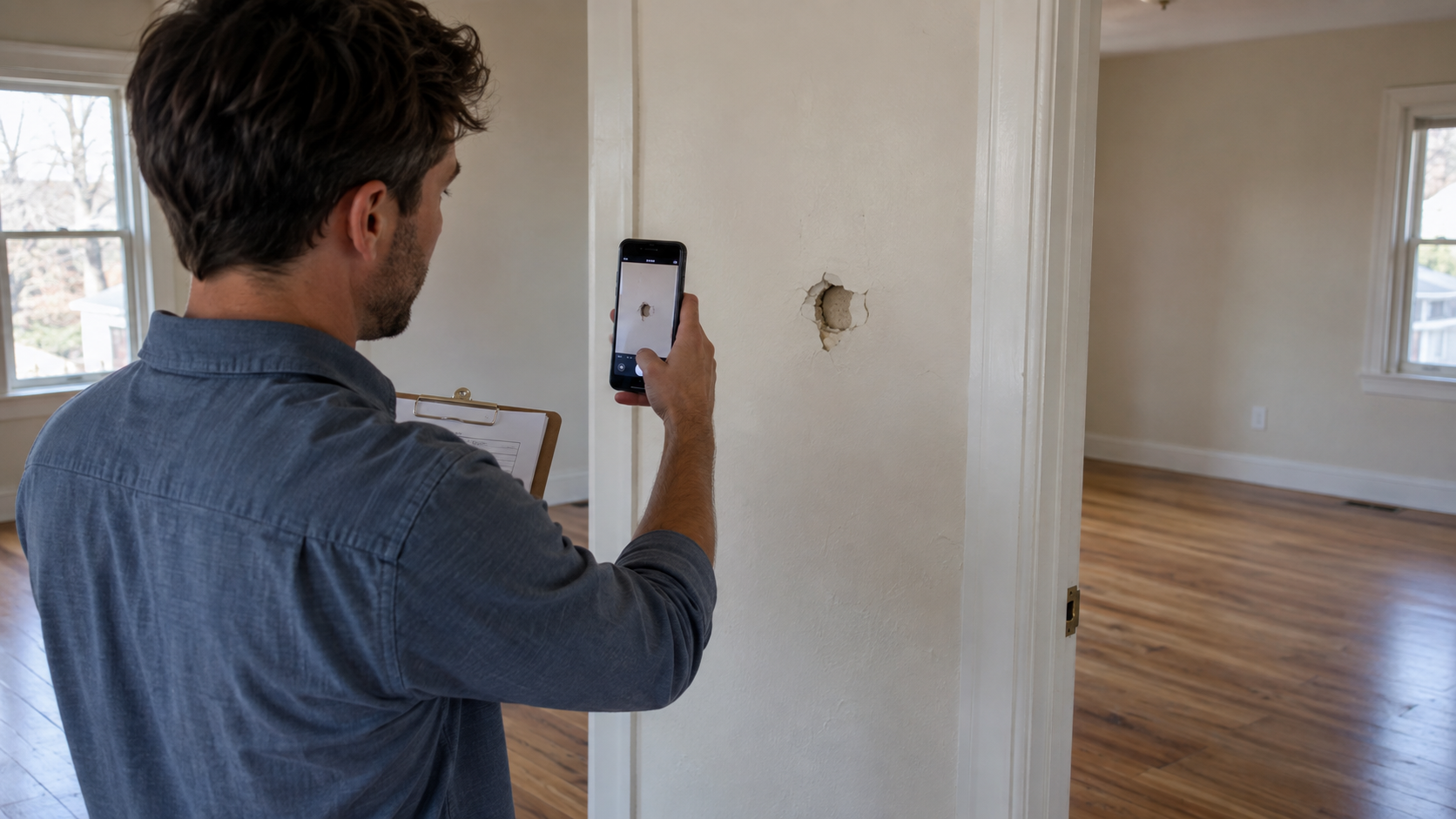
The security deposit isn’t a way for a tenant to skip the obligation to pay rent during the lease, but once the tenancy ends, you can use it to cover unpaid rent. ORC 5321.16 also allows you to apply the security deposit to cover past due rent and actual damages from the tenant’s noncompliance with the lease or ORC 5321.05, which requires tenants to use electrical and plumbing fixtures properly and avoid damaging the premises. Lawful deductions commonly include:
- Unpaid rent and other charges owed under the lease agreement
- Large holes in walls, damaged electrical outlets, or plumbing fixtures broken through misuse
- Pet stains and pet urine stains that require professional carpet cleaning or replacement, whether covered by pet deposits or the general deposit
- A water heater or appliance damaged by tenant misuse, prorated for age
Deductions can’t include normal wear and tear, such as faded paint or carpet worn along walkways. Charge reasonable, depreciated costs rather than full replacement value, and see our guide to normal wear and tear vs. damage for a room-by-room breakdown of where the line falls.
Prepare the Refund and the Statement
If the unit passes inspection and the tenant owes nothing, issue a full refund of the full security deposit, plus any interest owed, with a short letter confirming no deductions were taken. A full deposit return still deserves a written record, because it proves you met the deadline.
When you keep any part of the deposit, prepare the refund check and the written itemized statement as one package. The statement should show the original security deposit amount, each deduction, and the remaining balance the check covers. If unpaid rent or damages exceed the security deposit, note the balance the tenant still owes and pursue it through legal channels rather than simply holding funds.
Deliver It With Proof
Mail the package to the forwarding address using a method that proves when it was sent. A USPS Certificate of Mailing is a postmarked receipt showing the date you presented the item for mailing, though it doesn’t confirm delivery, so many owners pair it with Certified Mail when a dispute seems likely.
Keep copies of the statement, check, and mailing receipt with your inspection photos and invoices long after the tenant moves on. In a separate 2025 Toledo case, the former tenant filed suit more than four months after moving out. The same record-keeping discipline supports Toledo housing compliance, so one organized system serves both purposes.
Writing a Compliant Security Deposit Itemized Statement in Ohio
The itemized statement is what makes withholding any part of a tenant’s security deposit defensible. A security deposit itemized statement in Ohio has to do more than list charges, because a court will read it line by line to decide whether each deduction was lawful.

What the Statement Must Include
The statute requires every deduction to be itemized and identified in a written notice, and Bennett shows that sending a list isn’t enough if the charges can’t be proven. A defensible statement includes:
- The tenant names, rental address, lease end date, and the date possession was returned
- The original deposit amount and any interest owed
- Each deduction with a specific description, its location, and why it’s tied to the lease or to damage beyond normal wear and tear
- The cost of each item, with depreciation applied and invoices or estimates attached
- Any unpaid rent applied, listed by month
- The remaining balance returned with the statement
Common Itemization Mistakes
Deductions usually fall apart for a handful of fixable reasons:
- Vague descriptions: A line reading “cleaning: $200” doesn’t show whether the work went beyond ordinary wear, so describe what was cleaned, where, and why.
- Charging for normal wear and tear: Faded paint and traffic-worn carpet are the owner’s cost, and including them turns a lawful deduction into money wrongfully withheld.
- Billing full replacement cost: Carpet, blinds, and appliances should be prorated for age rather than charged at the price of new.
- Missing the deadline: Put day 30 on the calendar the moment the tenant returns the keys.
- Skipping proper documentation: Without move-in and move-out photos, a court may find your charges unsupported, exactly as it did in Bennett.
Each mistake is a process gap rather than a legal gray area, and closing those gaps is the most reliable way to avoid disputes.
Landlord Deposit Refund Rules for Toledo Owners
Beyond the deadline and the statement, a few landlord deposit refund rules Toledo owners should know determine how much goes back to the tenant and who receives it.
Interest on Long-Held Deposits
Ohio security deposit laws don’t cap security deposit amounts, but they do require you to pay interest on larger deposits. Under ORC 5321.16(A), the portion above $50 or one month’s rent, whichever is greater, earns 5% per year if the tenant remains in possession for six months or more, and the interest must be computed and paid annually. A tenant paying $1,000 a month with a $1,500 deposit, for example, earns interest on the $500 excess, or $25 per year. If you haven’t paid it annually, include what’s owed with the final refund.
Pet deposits deserve the same attention. Under ORC 5321.01, a security deposit is any deposit of money or property that secures the tenant’s performance under a rental agreement, so refundable pet deposits and any additional security deposit generally follow the same rules. Include them when you total security deposit amounts for interest, return them within the same 30 days, and state clearly in your lease whether any pet charge is refundable.
Partial Refunds, Joint Tenants, and Deposit-Free Options
A partial refund is the remaining balance after lawful deductions, delivered with the statement that explains it. Don’t hold the undisputed portion while you wait on a contractor’s invoice, since a reasonable written estimate lets you meet the deadline and still document the charge.
The statute doesn’t specify who receives the security deposit refund when several tenants share a lease, so your lease should. Many landlords issue one check payable to all tenants and send the statement to every forwarding address provided. Courts also look at who actually paid the security deposit, and in Bennett the appeals court directed judgment to the tenant who paid it.
Deposit alternatives remove much of the work of returning security deposits because there’s no cash balance to hold, itemize, and refund, which is part of the growing trend of deposit-free rentals. Oz Realty’s tech stack includes Obligo for owners who want to explore that route.
Security Deposit Penalties in Ohio
The security deposit penalties Ohio courts apply are what make each earlier step matter, because a single process failure can multiply the cost of an ordinary move-out.
Wrongful Withholding and Double Damages
Under ORC 5321.16(C), if the landlord fails to comply with the return rules, the tenant may recover the money due plus damages equal to the amount wrongfully withheld and reasonable attorney’s fees. In Smith v. Padgett, the Ohio Supreme Court held that when a landlord wrongfully withholds any portion of a tenant’s security deposit, those damages and fees are mandatory even if a timely itemized list was provided. The amount wrongfully withheld is whatever the landlord owed beyond lawful deductions, and no finding of bad faith is required.
In practice, the tenant recovers double the amount wrongfully withheld, and the Ohio State Bar Association notes that courts hold a hearing to set reasonable fees when an attorney represents the tenant. Every failure described above leads here, whether it’s a missed deadline, a vague line item, or a charge for normal wear and tear. Deposit handling is one of several areas where small procedural slips carry outsized costs, much like what landlords still get wrong in Toledo evictions.
How Disputes Escalate
A dispute usually begins with a demand letter from the tenant, and Ohio Legal Help offers a form assistant that generates one, while some tenants also contact legal aid before filing. If the letter doesn’t resolve it, the tenant can file in small claims court, which hears money claims up to $6,000 under ORC 1925.02, and a landlord who loses may also owe court costs.
Small claims court decisions turn on evidence: the move-in report, dated photos, invoices, the itemized statement, and proof of mailing. When a demand letter arrives, review each deduction honestly and refund any charge you can’t document or that reflects normal wear and tear, since settling early avoids legal complications that cost far more. Following proper procedures from move-in onward is the same discipline behind these best practices for property owners in Toledo.
Build a Deposit Process That Holds Up Every Time
A compliant return comes down to three things: meeting the 30-day deadline, keeping thorough documentation from move-in to move-out, and sending an itemized statement that ties every deduction to evidence. A repeatable process keeps you out of penalty territory even when a tenant disputes the outcome, because the record speaks for itself.
Oz Realty runs that process for every rental unit we manage in Toledo. We complete documented move-in and move-out inspections, prepare itemized statements backed by photos and invoices, track deadlines and interest through AppFolio, and deliver every return on time and in full compliance with Ohio security deposit laws.
Never miss a deposit deadline or fumble the paperwork again. Get a free rental analysis and let Oz Realty handle deposit returns in full compliance with Ohio law.


