

Many rental property owners assume that the only way to improve rental cash flow is by raising rent. On the surface, that logic makes sense. Higher rent should mean more income. But in markets like Toledo, rent growth has limits, and pushing too hard often creates new problems.
So, what happens when rent increases start to hurt occupancy, tenant satisfaction, or long-term returns? This is where professional property managers take a different approach. Instead of relying on higher rents, they focus on operational efficiency, income stability, and expense control to create steady cash flow.
In this article, you’ll see how experienced property managers improve profitability by tightening systems, reducing inefficiencies, and protecting income, all without leaning on constant rent hikes.
Why Raising Rent Isn’t Always the Best Cash Flow Strategy
Raising rent often feels like the fastest way to increase cash flow. When expenses rise or margins tighten, many rental property owners turn to rent hikes as the default solution. That approach can work briefly. Over time, it often creates more problems than it solves.
This section requires a shift in how cash flow is viewed. Strong performance in a rental property investment comes from stability, not constant pricing pressure. Frequent rent increases introduce operational risks that directly affect net profit. The most common risks include:
- Higher tenant turnover that disrupts steady cash flow
- Longer vacancy periods that reduce monthly income
- Increased marketing and leasing expenses
- Rushed tenant placement that leads to future issues
- Less predictable year-over-year performance
When tenants move out, owners lose more than rent. Vacancy delays rent collection, while repairs, cleaning, and leasing fees add up quickly. These costs offset rent increases and make cash flow management harder.
In markets like Toledo, consistency often wins. Toledo’s fundamentals support long-term real estate investment through stable demand, reasonable property values, and manageable operating costs. Investors who prioritize occupancy and expense control frequently outperform those focused solely on raising rent.
Professional property managers respond to this reality by pricing rentals based on data. They conduct market research and follow local market trends to position properties competitively. Instead of trying to justify higher rents year after year, they focus on systems that protect income, reduce turnover, and help ensure the investment remains profitable.
How Cash Flow Is Really Created in Rental Properties
Cash flow in a rental property is created by many operational decisions working together every month. Rent plays a role, but it is only one part of a larger system that determines whether a property produces reliable income or ongoing frustration.
Strong performance in a rental property investment depends on how efficiently that system operates. When leasing, maintenance, and administration are aligned, income becomes more predictable and expenses stay controlled. When they are not, even higher rents fail to produce positive cash flow.
The Core Drivers Behind Rental Cash Flow
Several operational factors work together to shape results:
- Vacancy rate and lease-up speed
- Tenant retention and renewal frequency
- Operating and maintenance expenses
- Emergency repair frequency
- Administrative efficiency and oversight
Vacancy and Fixed Costs Shape Monthly Cash Flow
Vacancy has an immediate impact on income. Each empty month interrupts rent collection while fixed costs like mortgage payments, property taxes, and insurance continue. Slow leasing or frequent turnover makes it difficult to maintain steady cash flow, even in strong markets.
Calculating Cash Flow Beyond Rent
For rental property owners, accurately calculating cash flow requires accounting for more than rent. Ongoing maintenance, property management fees, and fixed expenses all affect performance. Professional managers also help owners capture available tax deductions and tax benefits tied to operating an investment property, which strengthens net profit and financial decision-making.
Expense Control Protects Net Income
Operating expenses matter just as much as income. Routine maintenance, preventative care, and well-timed property improvements help control costs. Poor maintenance practices lead to emergencies, higher repair bills, and frustrated tenants, all of which reduce net profit and damage tenant satisfaction.
Tenant Quality Creates Income Stability
Tenant quality plays a major role in cash flow performance. Reliable tenants pay on time, stay longer, and take better care of the property. That consistency improves cash flow management and reduces unexpected expenses.
How Professional Management Ties It All Together
Professional property management brings structure to these moving parts. A skilled property management company coordinates leasing, maintenance, administration, and oversight so each decision supports long-term performance. This coordination helps rental property owners improve cash flow, protect property values, and ensure the investment remains profitable.
Property Management Cash Flow Strategies That Don’t Involve Rent Increases
If cash flow is inconsistent, the issue is rarely rent. More often, it is money leaking out through vacancies, inefficiencies, and avoidable expenses. That is where professional property management changes the equation.
Experienced managers focus on systems that protect income and reduce waste. These property management cash flow strategies help rental property owners improve cash flow without putting pressure on tenants or risking occupancy. The goal is to create reliable income that supports long-term real estate investment performance.
Instead of asking how to justify higher rents, professional managers ask a better question. Where is cash flow being lost, and how can it be fixed?
Reducing Vacancy Through Faster Leasing and Renewals
Vacancy is one of the biggest threats to positive cash flow. Every empty day reduces income while expenses like mortgage payments and property taxes continue.
Professional property managers work to shorten vacancy periods through efficient leasing systems. Faster leasing directly helps improve rental cash flow by keeping units occupied. Key practices include:
- Professional marketing and listing syndication
- Faster response times to tenant inquiries
- Streamlined showing and application processes
- Proactive renewal outreach
- Reduced downtime between tenants
Improving Tenant Retention to Stabilize Income
Tenant retention is a major driver of steady cash flow. Retaining good tenants reduces turnover costs and protects annual income. When tenants stay longer, rental property owners benefit from:
- Fewer annual move-outs
- Lower turnover and make-ready costs
- More consistent monthly income
Controlling Operating Expenses Through Vendor Management
Expense control often has a greater impact on cash flow than rent increases. Professional management brings discipline and predictability to operating costs. One key advantage is economies of scale. Managing multiple properties gives property managers leverage to negotiate better pricing, set clear service standards, and reduce repeat visits. These efficiencies lower per-unit costs and keep expenses predictable. Key cost-control measures include:
- Negotiated vendor pricing through volume relationships
- Established response standards
- Preventative maintenance scheduling
- Reduced repeat service calls
- Better cost predictability
Preventing Costly Maintenance Emergencies
Emergency repairs drain cash flow quickly. After-hours service calls and urgent fixes often come with premium costs. Professional property managers reduce these risks through proactive inspections and scheduled maintenance. Addressing small issues early prevents expensive failures later. This approach protects net profit, supports tenant satisfaction, and stabilizes monthly income across the portfolio.
Rental Income Optimization Tips Built Into Professional Management
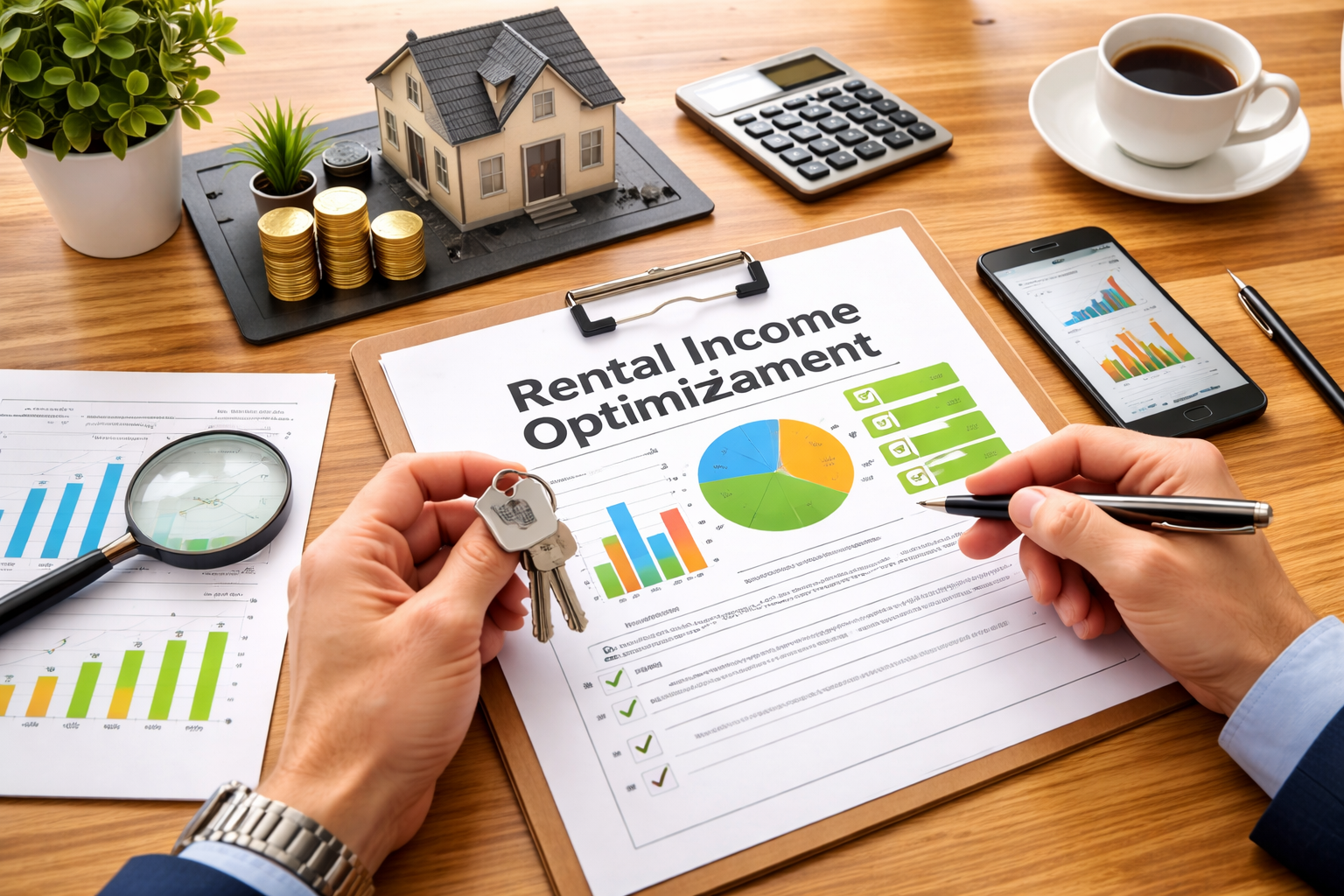
Most income problems do not come from rent being too low. They come from small breakdowns that happen month after month. Missed payments. Inconsistent enforcement. Expenses that creep up unnoticed. Professional management addresses these issues through systems designed to protect income over time.
These rental income optimization tips are not quick fixes. They work because they are applied consistently. That consistency helps rental property owners increase rental income while maintaining strong tenant relationships and predictable cash flow management.
Tip #1: Screening for Long-Term Tenant Fit
The quality of your tenants directly affects income stability. Poor tenant screening leads to late payments, early move-outs, and higher repair costs. Each of these issues chips away at net profit.
Professional property managers use structured screening to evaluate income, credit, and rental history. Strong screening results in fewer payment issues and longer tenancy. Reliable tenants improve rent collection and support steady cash flow across the life of the lease. Better tenant selection also reduces damage and turnover, helping ensure the rental property investment remains profitable.
Tip #2: Lease Enforcement and Policy Consistency
Inconsistent enforcement creates confusion. Confusion leads to missed payments and disputes. Professional managers avoid this by applying lease terms the same way every time. Consistent enforcement leads to:
- Fewer late or missed payments
- Reduced tenant disputes
- Lower legal and eviction risk
- More predictable cash flow
Clear rules protect both tenant relationships and financial performance. Consistency helps owners justify higher rental rates by maintaining standards and property condition.
Tip #3: Expense Tracking and Financial Reporting
Cash flow improves when owners can see where money is going. Professional reporting provides that visibility. A reliable property management company uses detailed financial reports and property management software to track income, expenses, and trends. These tools help landlords identify inefficiencies, plan monthly payments, and make informed decisions that increase cash flow over time.
The Compounding Effect of Professional Management on Cash Flow
Cash flow improves when recurring problems are removed from day-to-day operations. Fewer vacant days. Fewer late payments. Repair costs that stay under control. Professional property management is designed to eliminate these income drains so results can build steadily over time.
Operational Gains That Strengthen Cash Flow
Small improvements create meaningful impact when applied consistently:
- Reduced vacancy keeps income consistent
- Higher tenant retention lowers turnover and make-ready costs
- Proactive maintenance limits emergency repairs
- Reliable rent collection improves cash flow timing
Each gain supports stronger cash flow management and protects net profit at the property level.
How Cash Flow Compounds Over 3 to 5 Years
In the first year, improved leasing processes reduce vacancy and stabilize monthly income. By the second year, tenant retention improves, lowering turnover and make-ready costs. By year three, preventative maintenance reduces emergency repairs, keeping expenses predictable. Over years four and five, these efficiencies work together. Income becomes more reliable, costs stay controlled, and cash flow strengthens without relying on rent increases.
Scalable Systems for Long-Term Growth
As portfolios expand, consistency becomes more valuable. Processes that work for one rental can be applied across many. Leasing, maintenance, and expense control scale more efficiently.
For real estate investors, this structure supports sustainable growth while keeping monthly payments, operating costs, and risk manageable.
Why Self-Managing Landlords Often Leave Cash Flow on the Table
Self-managing can work for some rental property owners. The challenge is that cash flow losses often come from small, repeat issues that are easy to overlook. The areas below are where self-management most often impacts cash flow management, even when rents remain competitive.
Maintenance Delays Add Up
When maintenance is handled around other responsibilities, repairs are usually reactive. Minor issues turn into larger expenses that reduce net profit and disrupt steady cash flow.
Inconsistent Rules Create Payment Issues
Without consistent lease enforcement, late payments and disputes increase. Gaps in rent collection lead to uneven income and financial uncertainty.
Higher Costs Without Vendor Leverage
Self-managing landlords often lack access to negotiated vendor pricing. Repair costs stay unpredictable, which makes it harder to increase cash flow over time.
When Professional Property Management Makes the Biggest Difference
Real estate ownership becomes more demanding as portfolios grow, properties age, and time becomes limited. At that stage, strong results depend on consistent systems and local oversight. Professional property management delivers the greatest impact when owners need reliable income, controlled expenses, and informed decision-making rooted in the local market.
Local expertise plays a direct role in rental performance. A boots-on-the-ground team understands neighborhood demand, current market trends, and what tenants are willing to pay. That insight supports faster leasing, smarter pricing decisions, and more reliable cash flow. Certain ownership situations benefit more from professional management than others.
Multi-Property Portfolios
Managing multiple rentals requires coordination across leasing, maintenance, and rent collection. A professional property management company with boots on the ground ensures each property is handled consistently, helping owners maintain steady cash flow and increase cash flow across the portfolio.
Out-of-State Ownership
Distance limits visibility. Local managers provide boots on the ground oversight, respond quickly to issues, and keep properties aligned with neighborhood-level market trends that affect demand and pricing.
Older Properties and Ongoing Improvements
Older homes benefit from regular inspections and planned property improvements. Local teams spot issues early, reduce emergency repairs, and protect property values, which supports stronger net profit.
Long-Term Investment Focus
For real estate investors focused on sustainable growth, professional management supports scalability and helps ensure each real estate investment remains profitable over time.
A Smarter Way to Improve Cash Flow Without Raising Rent
Strong cash flow is built through operational discipline. When vacancy stays low, expenses stay controlled, and income stays predictable, rental properties perform better over time.
Professional property managers improve results by focusing on systems, not shortcuts. Through consistent leasing, reliable rent collection, proactive maintenance, and disciplined expense control, they help rental property owners improve rental cash flow without sacrificing occupancy or tenant satisfaction. These proven property management cash flow strategies protect income today while supporting long-term performance.
For investors who want stability, scalability, and confidence in their numbers, professional management makes a measurable difference. Oz Realty helps landlords strengthen cash flow through smart operations and local expertise.
If your goal is to improve cash flow without relying on constant rent increases, Oz Realty can help you move forward with clarity, consistency, and control.


